 Japan
Japan Korea
Korea China
China

Choosing a Laser for Hyperpigmentation
What You Do Before Treatment Matters Most
Hyperpigmentation is one of the most common concerns patients bring to aesthetic consultations, and laser hyperpigmentation treatments have become a go-to solution for addressing pigmentation issues ranging from dark spots to melasma. The challenge is not the technology. The assessment before treatment too often gets treated as a formality rather than the decision point it actually is.
The wavelength conversation matters. So does pulse duration, spot size, and laser parameters. But none of those decisions produce consistent outcomes if they are made before answering three more fundamental questions: what type of hyperpigmentation is this, how deep is the pigment, and what does this patient's skin type tell us about how it will respond to laser energy?
Key Takeaways
- Melasma, post-inflammatory hyperpigmentation, and solar lentigines look similar on the surface but behave very differently under laser energy.
- Where the pigment sits in the skin matters as much as the skin type. Depth and Fitzpatrick Skin Type shape the wavelength choice.
- The Fitzpatrick scale is your starting point for skin type assessment. Darker skin types and deeper pigmented lesions need wavelengths that bypass the surface rather than concentrate energy there.
- Asian skin can be more complex to treat and warrants more conservative parameters across the board.
- Lasering pigmentation that is still active or inflamed can make things worse, not better
Why Hyperpigmentation Is Not One Condition
Patients use the word hyperpigmentation to describe a broad range of presentations, from post-inflammatory discoloration triggered by acne or procedures, to dark spots caused by UV damage and prolonged sun exposure. Clinically, those presentations differ significantly in their cause, their pigment distribution, and their response to treatment. Treating them as interchangeable is where outcomes fall short.
Melasma
Melasma can present as epidermal, dermal, or mixed pigmentation, and most cases have pigment across both layers rather than cleanly in one. The mixed type does not respond well to aggressive treatment and tends to push back when pushed too hard. Add hormonal influence and a tendency to recur, and you have a condition that rewards patience over intensity.
Key clinical considerations:
- Do not assume pigment depth from appearance alone. A Wood's lamp check will tell you more
- Hormones and sun exposure are active drivers. If either is uncontrolled, the pigmentation is still active
- A rebound after treatment is often a sign the depth or stability was not assessed before starting
Post-Inflammatory Hyperpigmentation
PIH shows up after the skin has been through something: acne, a procedure, a wound, or even a reaction. Research shows it hits harder and lasts longer in darker skin tones, and laser energy that stirs up inflammation can make it worse rather than better in Fitzpatrick types III to VI.
Key clinical considerations:
- PIH must be stable before laser treatment is appropriate
- Darker skin types carry a higher risk of post-laser PIH exacerbation
- The initiating inflammatory condition should be fully resolved before proceeding
Solar Lentigines
Solar lentigines, commonly known as sunspots, are superficial, well-defined dark spots that develop from UV damage and prolonged sunlight overexposure, making them among the more straightforward hyperpigmentation presentations for laser. A review of 41 clinical trials covering over 3,200 patients found picosecond lasers achieving clearance rates between 67.9% and 93%. Skin type still governs wavelength selection, but the overall risk profile is lower compared to melasma or active PIH.
Key clinical considerations:
- Superficial pigment depth responds well to targeted laser energy, including nonablative laser approaches
- Lesions are generally stable and do not require a waiting period before treatment
- Skin type assessment remains necessary to guide wavelength choice
The Three Assessment Variables That Drive Device Selection
Once the pigmentation type is established, three variables work together to determine which device and parameters are appropriate. These are not independent steps. They inform each other.
Pigmentation Depth
Think of it this way: a wavelength that works well for pigment sitting near the surface will not reach pigment sitting deeper in the skin. Superficial pigmentation needs a wavelength that acts early on the way in. Deeper pigmentation needs one that travels further before releasing its energy. When pigment sits across both layers, a single fixed approach is unlikely to cover the full picture.
A Wood's lamp examination helps identify pigment depth before any device decision is made:
- Superficial pigmentation shows clear color enhancement under UV light
- Deep pigmentation shows no enhancement
- Mixed presentations show partial enhancement and typically require a staged, multi-depth approach
Fitzpatrick Skin Type
The Fitzpatrick scale, which categorizes Fitzpatrick skin types I through VI, is the standard framework for predicting how a patient's skin will respond to laser energy. Research confirms that longer wavelengths penetrate more deeply and are less absorbed at the surface, making them a better fit for darker skin types and deeper pigmented lesions. Fitzpatrick skin types should always be confirmed at the consultation rather than assumed from visual presentation.
What this means by skin type:
- Fitzpatrick I to III: laser energy reaches its target with less surface interference, giving practitioners a wider range of viable wavelengths
- Fitzpatrick IV to VI: higher melanin content at the skin surface absorbs more energy before it reaches the pigment, making longer wavelengths the appropriate choice
- Asian skin (typically Fitzpatrick III to IV): warrants particular attention given its tendency toward reactivity and a greater predisposition to post-treatment pigmentation changes following any inflammatory stimulus
Active vs. Stable Pigmentation
A variable that is sometimes overlooked is whether the pigmentation is currently active or has stabilized. Treating active or inflamed pigmentation with laser adds an inflammatory event on top of an existing one, which in reactive skin types can deepen the discoloration rather than clear it.
Before proceeding with any hyperpigmentation laser treatment, confirm:
- Melasma is not being actively driven by hormonal factors or recent sun exposure, and the patient is following sun protection and sun avoidance guidance
- PIH has fully stabilized and the initiating inflammatory condition has resolved
- Solar lentigines, which are generally stable, still require a skin type assessment before wavelength selection
How Wavelength Selection Follows From the Assessment
With pigmentation type, depth, and skin type confirmed, wavelength selection becomes a structured decision rather than a starting point. Laser advancements have made it possible to address a wider range of presentations than ever before, but only when the right laser device is matched to the right clinical finding. Follow this sequence:
- Identify pigmentation depth. Superficial pigmentation calls for shorter wavelengths that act near the surface of the skin. Deeper or mixed pigmentation needs a longer wavelength that can penetrate more deeply, bypassing the superficial pigment.
- Match wavelength to Fitzpatrick skin type. Lighter skin types (I to III) have less melanin at the surface, so shorter wavelengths can reach their target without much interference. In darker skin types (IV to VI), that surface melanin picks up energy fast, which is why longer wavelengths are the right call. They get past it rather than concentrating on it.
- Consider pulse duration. Picosecond lasers deliver energy in ultra-short bursts that break pigment apart with less heat than older laser technology. For patients where heat-related skin reactions are a concern, this distinction matters clinically.
- Select a platform with the flexibility to act on the assessment. A patient with superficial sun spots and lighter skin requires a different approach than one with mixed melasma and darker skin. A platform with multiple wavelengths allows the assessment findings to guide treatment rather than the other way around.
Matching the Right Technology to What the Skin Reveals
The assessment framework outlined above maps directly to device capability. Two platforms from Candela are built to support the range of decisions that pre-treatment assessment produces.
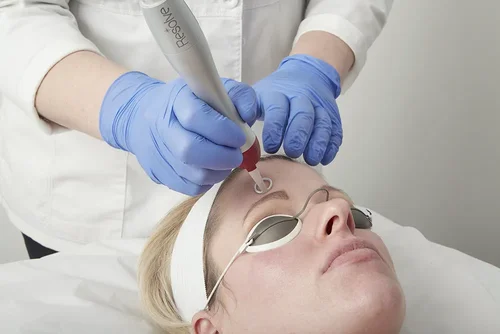
PicoWay® is a picosecond laser platform with four wavelengths (532 nm, 730 nm, 785 nm, and 1064 nm), giving practitioners the flexibility to match the right depth of energy to what the consultation reveals about pigmentation type and skin type. It is FDA-cleared across a broad range of pigmentation indications and carries a well-established safety profile.
Key capabilities for hyperpigmentation treatment:
- FDA-cleared for benign pigmented lesions (Fitzpatrick I to IV), melasma (I to IV), lentigines (I to IV), Nevus of Ota (III to IV), and Cafe au Lait Macules (I to IV)
- Resolve and Resolve Fusion applicators treat with minimal disruption to the skin surface, supporting low-downtime sessions of 15 to 20 minutes
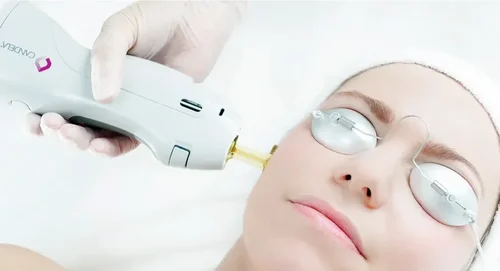
The Gentle Pro™ Series offers dual-wavelength capability with 755 nm alexandrite and 1064 nm Nd:YAG in a single platform, FDA-cleared for benign pigmented lesions. The two wavelengths align directly with Fitzpatrick-based assessment findings, and the proprietary Dynamic Cooling Device (DCD) delivers a cooling burst with each laser pulse to protect the skin surface throughout treatment.
Key capabilities for hyperpigmentation treatment:
- 755 nm alexandrite targets superficial pigmentation in lighter skin types (Fitzpatrick I to III)
- 1064 nm Nd:YAG reaches deeper pigmentation with less surface interference, suited for darker skin types (Fitzpatrick IV to VI)
Conclusion: Treat What the Assessment Tells You
Hyperpigmentation laser treatment outcomes are not determined at the device settings screen. They are determined in the consultation room when the practitioner takes the time to identify the pigmentation type, assess the depth, evaluate the Fitzpatrick skin type, and confirm that the condition is stable enough to treat.
The technology exists to match almost any pigmentation presentation with a well-targeted laser approach. What it cannot do is substitute for the clinical judgment that has to come first. Treatment plans that start with a thorough assessment and carry through to post-treatment care guidance, including sun protection, are the ones that produce results that hold up.
To see how PicoWay or the Gentle Pro Series fits your patient mix and practice goals, contact a Candela product expert.