 Japan
Japan Korea
Korea China
China

Laser for Rosacea
What Treatment Works, What to Consider
Rosacea is a chronic inflammatory condition that presents differently in every patient and responds differently to every treatment. Topical therapies and oral medications address the inflammatory component well. What they don't reach is the vascular layer: the persistent background erythema, dilated capillaries, and telangiectasia that define how rosacea looks and why patients keep coming back for more than a prescription can offer. Laser treatment is where that gap closes.
For practitioners, the clinical question is which modality fits the presentation in front of them, and whether the platform they have covers the full range of what their patient population brings in. This post maps the laser treatment options for rosacea, how each one works at the tissue level, and what to evaluate when selecting a platform.
Key Takeaways
- Rosacea is a chronic vascular skin condition with no permanent resolution, making it a long-term treatment category for aesthetic and dermatologic practices.
- The erythematotelangiectatic subtype is the primary candidate for vascular laser treatment; subtype identification drives modality selection.
- PDL, IPL, KTP, Nd:YAG, and ablative lasers each address rosacea differently based on wavelength, depth, and the presentation being treated.
- Subtype, Fitzpatrick skin type, and the demographics of a practice's patient population all factor into which laser platform makes the most clinical sense.
Rosacea Subtypes and Their Role in Laser Selection
Rosacea is not a single clinical presentation, and that distinction matters before any device decision is made. The subtype shapes whether laser is appropriate at all, and if so, which category is most relevant.
The four recognized subtypes break down as follows:
- Erythematotelangiectatic (ETR): Characterized by persistent central facial redness, flushing, and visible telangiectasia. This is the presentation most responsive to vascular laser treatment, and the primary indication for PDL, IPL, and KTP. Vascular-selective lasers and IPL are the current standard of care for persistent erythema in ETR that doesn't respond adequately to topical vasoconstrictors.
- Papulopustular: Inflammatory papules and pustules appear alongside the vascular component. Laser targets the underlying vessel activity, but the inflammatory element typically requires concurrent topical or systemic therapy. A combination approach is the norm rather than the exception with this subtype.
- Phymatous: Thickened, irregular skin texture driven by sebaceous hyperplasia, most commonly affecting the nose. Ablative laser is the relevant modality here, not vascular. The treatment goal is recontouring, not vessel coagulation.
- Ocular: Affects the periorbital area and eyelids. Laser is not indicated for ocular rosacea and is noted here for completeness only.
Subtype identification is the first clinical decision, not a preliminary step. Getting it right before selecting a modality is what keeps treatment on the right tissue.
Which Lasers Treat Rosacea and How Do They Work
Laser treatment for rosacea draws from several modalities, each working differently at the tissue level. PDL, KTP, IPL, and Nd:YAG all demonstrate clinical efficacy for rosacea, with distinct mechanisms and indications that shape how each fits into a treatment program.
1. Pulsed Dye Laser (PDL)
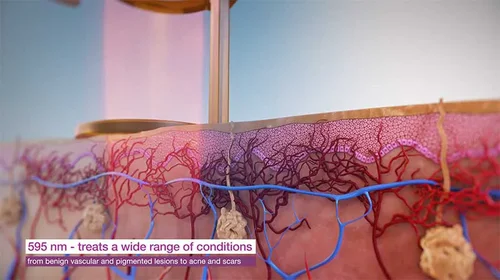
At 595 nm, PDL targets oxyhemoglobin in blood vessels at a much higher absorption rate than the surrounding skin tissue. The energy converts to heat inside the vessel, coagulates the wall, and closes it off without significant impact to adjacent tissue.
- Pulse duration is adjustable: shorter settings work on fine superficial capillaries, while longer durations are needed to heat larger or deeper vessels adequately
- PDL carries one of the strongest bodies of clinical evidence across all laser modalities used for ETR, with decades of consistent use in vascular rosacea treatment
2. Intense Pulsed Light (IPL)
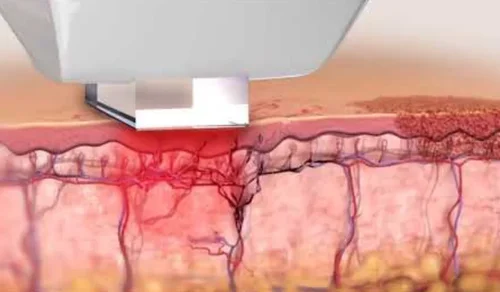
Unlike the single-wavelength lasers in this section, IPL uses a broadband light source that delivers multiple wavelengths at once. It appears consistently in rosacea treatment protocols because it addresses a presentation profile that the others do not cover as broadly.
- Cutoff filters narrow the output toward vascular targets, allowing the operator to tune the treatment toward redness, telangiectasia, or pigment irregularities, depending on what the patient presents with
- Where PDL targets discrete vessels with precision, IPL covers diffuse erythema across a wider surface area in a single pass, making it particularly relevant for mild to moderate ETR with durable erythema reduction outcomes
3. KTP Laser (532 nm)
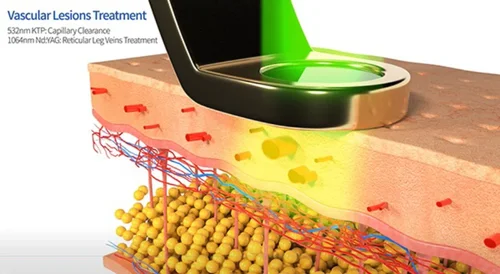
The KTP laser's 532 nm wavelength sits closer to the peak absorption of oxyhemoglobin than PDL, making it highly effective at the superficial vascular layer. The tradeoff is penetration depth and melanin absorption - riskier for darker skin. KTP doesn't reach deeper vessels the way PDL can.
- For most rosacea presentations, that shallower reach is not a limitation, since the target vessels are superficial telangiectasia and fine facial capillaries
- KTP has demonstrated comparable efficacy to PDL for rosacea-related erythema and telangiectasia, with significant reduction in both treatment groups
4. Nd:YAG Laser (1064 nm)
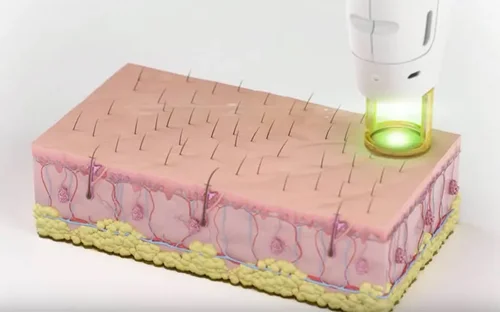
At 1064 nm, Nd:YAG sits at the opposite end of the spectrum from KTP. The longer wavelength penetrates deeper into the dermis and encounters less melanin interference on the way.
- For rosacea patients with Fitzpatrick skin types IV through VI, where melanin competition at shorter wavelengths raises epidermal risk, Nd:YAG offers a pathway to vascular treatment without the same surface concerns
- ETR patients treated with long-pulsed Nd:YAG have shown meaningful clinical response, with vascular presentations improving more consistently than papulopustular ones
5. Ablative Lasers (CO2 and Er:YAG)
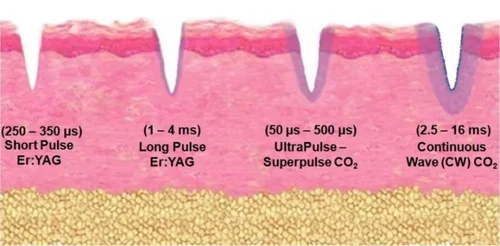
CO2 and Er:YAG occupy a separate category entirely. Neither targets hemoglobin, and neither belongs in a vascular rosacea protocol. Their role is specific: phymatous rosacea and the rhinophyma that develops from it, where the treatment problem is thickened sebaceous tissue, not dilated vessels.
- CO2 at 10,600 nm ablates tissue through water absorption with hemostatic control, allowing precise recontouring of the nasal architecture
- Er:YAG removes tissue with less thermal spread, which is relevant where scarring or pigmentation risk is a concern
- For rhinophyma specifically, CO2 resurfacing produces controlled, well-documented outcomes and remains the preferred approach in current clinical practice
How to Evaluate Laser Options for Your Rosacea Treatment Offering
Selecting the right platform is both a clinical and a practice investment decision. Five criteria shape that evaluation:
- Indication range: A platform cleared across the breadth of vascular rosacea presentations gives practitioners clinical latitude without adding a second device. Narrower clearance means a narrower patient base.
- Skin type coverage: Wavelength options and cooling system performance determine which Fitzpatrick skin types can be treated reliably. Practices serving a diverse patient mix need a platform that holds up across the spectrum.
- Platform versatility: A vascular laser that also handles spider veins, port wine stains, hemangiomas, and facial vessels extends the return on investment beyond rosacea alone.
- Consistency at repeat visits: Rosacea patients return on a long-term schedule, so treatment outcomes need to be reproducible from session to session. That reliability is what builds retention in this category.
- Workflow fit: Treatment speed, preset parameters, and interface usability all affect how efficiently a high-volume rosacea program runs.
Vbeam® by Candela: Built for the Vascular Complexity of Rosacea
Vbeam is a PDL platform, carrying 45 FDA-cleared indications and a clinical track record trusted across more than 670 hospitals and universities. For rosacea treatment, its 595 nm wavelength targets oxyhemoglobin in dilated facial vessels, and the Dynamic Cooling Device (DCD) delivers a precise cryogen burst with each pulse to protect the epidermal surface automatically.
Vbeam Pro extends the platform to 1064 nm for deeper vascular work, making it a single system capable of covering a wider range of rosacea presentations and skin types. It stores up to 18 custom treatment settings, reducing reconfiguration time between patient profiles.
Key practice considerations:
- DCD cooling scales with treatment parameters without manual adjustment between patients
- Cleared indications extend beyond rosacea into a broader vascular service menu, supporting a wider range of patient presentations in the same practice
Conclusion: Build a Rosacea Laser Program Worth Coming Back To
Rosacea doesn't resolve after one session, and that is not a limitation; it is a clinical reality that creates a predictable, loyal patient population for practices equipped to serve them well. The modality decision starts with the subtype, runs through skin type and presentation, and lands on a platform that covers that range with consistency over time.
PDL, IPL, KTP, Nd:YAG, and ablative lasers each have a defined role in the rosacea treatment landscape. Knowing where each one fits is what lets a practice offer the right treatment at the right visit.
Contact a Candela product expert to find out how Vbeam supports a rosacea treatment program built for the long term.
Frequently Asked Questions
How does rosacea laser treatment fit into a broader in-clinic skincare protocol?
Laser addresses the vascular component of rosacea, and complementary protocols can support the skin before and after each session. Post-treatment options that calm redness and reinforce skin barrier integrity help manage reactivity and improve the overall patient experience between maintenance visits.
What should practitioners know about treating rosacea patients who are on prescription rosacea medications?
Topical and systemic rosacea therapies address the inflammatory component and generally do not contraindicate laser treatment. Practitioners should review active prescriptions at consultation, as some agents affect skin sensitivity and may influence treatment parameters in the weeks leading up to a session.
How do seasonal or environmental triggers factor into timing laser treatments for rosacea patients?
Rosacea flares predictably with heat, UV exposure, and seasonal temperature shifts, and those same triggers can elevate baseline skin reactivity going into a laser session. Scheduling treatments during cooler, lower-UV periods and building trigger counseling into the post-treatment plan gives patients a better chance at durable outcomes between visits.