 Japan
Japan Korea
Korea China
China

Choosing a Laser Hair Removal Company for Your Practice
Laser hair removal is one of the most requested services in aesthetic medicine, and the patient pool is growing well beyond the traditional demographics. The global laser hair removal market was valued at USD 1.5 billion in 2025 and is projected to reach USD 5.8 billion by 2035. Patients are actively seeking out providers who offer the service, and that demand is only expanding to new demographics, including a growing male patient base.
For practitioners, that demand signal raises a decision that extends well beyond which device to purchase. The laser hair removal company you choose becomes a long-term business partner. Their technology determines which patients you can treat. Their service infrastructure determines how reliably your device operates. Their training programs determine how confident your staff will be from day one. Getting that decision right has a direct impact on your practice's performance, patient outcomes, and revenue consistency.
This guide covers what to evaluate, what to watch for, and what a strong device partner actually looks like in practice.
Key Takeaways
- The global laser hair removal market is projected to reach USD 5.8 billion by 2035, and patient demand is outpacing many practices' current service menus.
- Laser hair removal builds both patient acquisition and retention,typically with 6 to 8 sessions per course, creating consistent appointment volume.
- The company behind the device determines how reliably it performs, not just the device itself.
- Total investment goes beyond equipment cost , including training, service agreements, and downtime, all affect long-term ROI.
- Dual-wavelength platforms allow practices to treat all skin types without turning patients away.
The Business Case for Adding Laser Hair Removal Services

Laser hair removal is one of the few aesthetic services that drives both patient acquisition and retention simultaneously.
Hair removal ranks among the top five most popular non-surgical aesthetic procedures worldwide, and patient demand continues to grow across demographics. With 6 to 8 sessions per course of treatment, practices gain consistent, predictable appointment volume over several months. Once a patient starts a series, the treatment schedule builds retention on its own.
Treatments can be delegated to trained clinical staff, freeing physician time for higher-complexity procedures. And because most professional laser platforms treat more than hair, practices can expand into pigmentation, vascular lesions, and skin rejuvenation without adding new equipment, improving the return on a single device investment.
Key Criteria for Choosing a Laser Hair Removal Company
Latest Laser Hair Removal Technology
The technology a company brings to market determines the range of patients you can serve and the quality of outcomes you can deliver. Not all laser hair removal platforms are built the same, and the differences have real clinical and business consequences.
The 755 nm Alexandrite laser works with high melanin absorption, making it the go-to wavelength for skin types I-III. Nd:YAG at 1064 nm goes deeper into the follicle, which is why it performs well on darker skin types. A platform carrying both means your practice is not having the skin type conversation at the door.
Beyond wavelength, look for:
- Spot size range: Larger spot sizes treat more surface area per pulse. For large body areas like the back and legs, this translates directly to faster sessions and better patient throughput
- Pulse duration flexibility: Shorter pulse durations reach finer hair that standard settings may miss
- Cooling integration: Skin protection during treatment affects both patient comfort and their willingness to complete the full course
- Multi-indication capability: A platform cleared for pigmentation, vascular lesions, and wrinkles opens your service menu beyond hair removal from day one
When evaluating laser hair removal companies, ask specifically about FDA clearances and the clinical evidence supporting their platforms across different skin types.
Laser Hair Removal Equipment Cost and Total Investment
Laser hair removal equipment cost is one of the first questions practices ask, and it is also one of the most misunderstood. The purchase price of the device is only one part of the total investment. Evaluating it in isolation leads to underestimating the real cost of ownership over time.
A complete cost picture includes:
- Training: Does the company provide clinical training at the point of purchase, or is that an additional cost? Is training available on an ongoing basis as your staff changes?
- Service agreements: What does post-warranty coverage cost, and what does it include? A plan that excludes parts and labor can result in significant unexpected repair expenses
- Consumables: Are there per-treatment costs tied to the platform?
Service and Support Infrastructure
Device uptime is a direct business metric. For practices that depend on laser hair removal services as a core revenue driver, a non-operational device means lost appointments and lost income.
Not every service provider is held to the same standard. Third-party technicians may not be required to use certified parts or follow manufacturer maintenance schedules, and that gap shows up in device performance over time. Ask any company you are evaluating whether they are the sole authorized service provider for their own devices, and how quickly they can put an engineer on-site when something goes wrong.
Strong service infrastructure typically includes:
- Certified field service engineers trained specifically on the company's devices
- Regional coverage that puts an engineer close to your practice
- An extensive parts inventory at field locations for faster first-call resolution
- Preventative maintenance programs that reduce unplanned downtime
- A clear escalation path from remote technical support to on-site service
Clinical Training and Ongoing Education
Device performance is only as good as the staff operating it. A laser hair removal machine for business that comes with inadequate training creates risk on two fronts: inconsistent patient outcomes and staff who lack confidence in their protocols.
Training at the point of installation is a baseline, not a differentiator. What matters beyond that is whether your staff can access learning when new hires join, when protocols change, and when your team is ready to take on more complex cases.
What Candela Brings to Laser Hair Removal Practices
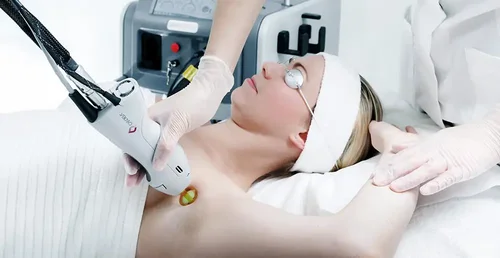
The Gentle Pro Series is Candela's laser hair removal device series, available in single or dual-wavelength configurations covering the full range of skin types and hair textures. The proprietary Dynamic Cooling Device (DCD(™)) delivers a burst of cryogen with each laser pulse, protecting the skin during treatment and supporting a comfortable patient experience that encourages compliance with the full treatment schedule. Beyond hair removal, devices in the series cover a range of FDA-cleared uses, including benign pigmented lesions, diffuse redness and facial vessels, spider and leg veins, wrinkles, and vascular lesions, making devices that expand your service menu alongside your patient base.
Partnering with Candela means ongoing support well beyond the device itself. The ServicePlus Protection Plan provides manufacturer-backed post-warranty coverage with certified parts, priority response, and preventative maintenance visits. A physician-led clinical training team supports your staff from day one, with on-site onboarding, on-demand learning, and access to clinical learnings from theCandela Institute for Excellence. Candela also supplies marketing tools, patient education resources, and staff training materials to help practices build patient demand and retention around their device investment.
Make the Right Call Before You Sign
Not every laser hair removal company is offering the same thing. The device is the starting point, but what surrounds it, the service model, the training infrastructure, the clinical support, determines whether that investment performs over the long term or creates ongoing friction for your practice.
The practices that get the most from laser hair removal are the ones that chose their device partner as deliberately as they chose the device. When you are ready to evaluate what that looks like, contact a Candela product expert to request a Gentle Pro Series demo.
Frequently Asked Questions
What is the difference between a medical-grade laser and a non-medical-grade device?
Medical-grade laser hair removal devices are FDA-cleared, built for continuous clinical use, and validated through clinical studies for use under licensed medical supervision. Non-medical-grade devices operate at lower energy levels, often use broad-spectrum light rather than targeted wavelengths, and are not cleared for the same range of skin types or indications.
How do I evaluate a laser hair removal company's training program before purchasing?
Ask what clinical training is included in the purchase price and whether ongoing education is available as your team and protocols evolve. A company that provides specialist-led training at installation and supports staff development over time is signaling a longer-term commitment to your practice's outcomes.
Can laser hair removal platforms treat all skin types, including darker tones?
Yes, with the right wavelength. Dual-wavelength platforms combining Alexandrite (755 nm) for lighter skin tones and Nd:YAG (1064 nm) for darker skin types allow practices to treat the full Fitzpatrick spectrum without limiting their patient base.
1. GentleMax Pro Plus and GentleMax Pro 510(k), K201111, May, 2020. GentleMax Pro Plus, GentleMax Pro and GentleLase Pro U, Health Canada License 75833. GentleLase Family, 510(K) clearance K140732, November 2014, GentleLase, Health Canada License 10714. GentleYag Laser, 510(K) clearance K033172, March 2003.
2. Gentle Family User Manuals: Gentle Series User Manual, 2023; GentleMax Pro Plus 8501-00-2400_D; GentleLase Pro-U and GentleYag 8501-00-2200, Rev. G, Sept. 2021
3. Data on File, Candela, 2026.