 Japan
Japan Korea
Korea China
China

Alexandrite Laser Hair Removal
Why the 755 nm Wavelength Remains a Practice Standard
Hair removal is one of the most requested services in aesthetic practice and when it comes to the technology behind it, not every wavelength is the same. The Alexandrite laser at 755 nm has a specific clinical profile: high melanin absorption, strong hair reduction outcomes in well-matched patients, and one of the deepest bodies of peer-reviewed evidence in aesthetic laser medicine. That profile is what makes it a deliberate choice for hair removal.
If your practice is evaluating a hair removal platform or building out a service menu that can handle consistent patient volume, the case for Alexandrite laser hair removal starts with understanding what the technology actually does and what it returns.
Key Takeaways
- The Alexandrite laser operates at 755 nm, making it one of the most clinically established options for hair removal in lighter skin tones.
- Large spot sizes and high repetition rates support fast treatments and high patient throughput.
- Alexandrite laser devices are FDA-cleared for permanent hair reduction and select additional indications.
- Patient demand for laser hair removal is growing year over year.
- GentleLase Pro® is a focused 755 nm Alexandrite platform with a clear upgrade path to dual-wavelength capability.
How Alexandrite Laser Hair Removal Works
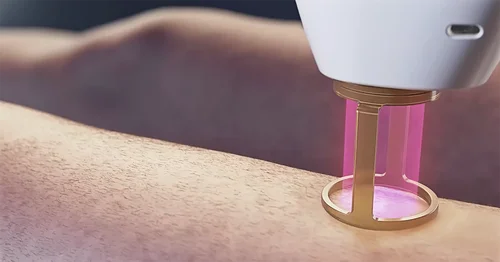
The Alexandrite laser works by targeting melanin, the pigment in hair follicles. The 755 nm wavelength is strongly absorbed by melanin, which means the laser energy converts to heat directly in the follicle, disrupting its ability to produce new hair. Where skin tone is lighter and hair is darker, that contrast makes targeting more precise and results more consistent.
This is also what defines the appropriate patient range. Patients with Fitzpatrick skin types I through III (and sometimes IV) are the best candidates for this wavelength because the contrast between skin and follicle pigment allows energy to concentrate in the right place. In patients with greater skin pigmentation, the risk of epidermal interaction increases, and longer wavelengths like 1064 nm Nd:YAG are generally the more appropriate clinical choice.
Alexandrite Laser Hair Removal Effectiveness: What the Clinical Evidence Shows
The 755 nm wavelength has one of the most developed bodies of clinical evidence in aesthetic laser medicine. Long-pulse Alexandrite lasers have been validated across hair removal and a range of dermatologic indications, with research spanning multiple device generations. That continuity is what makes it a practice standard rather than simply a popular technology.
One point practitioners sometimes underweigh: session spacing is as important as the device itself. Hair follicles move through growth phases, and sessions timed to the cycle are what make reduction cumulative rather than incremental. What you communicate at the initial consultation sets the patient's entire frame of reference for the results ahead.
What Alexandrite Laser Hair Removal Brings to Your Practice
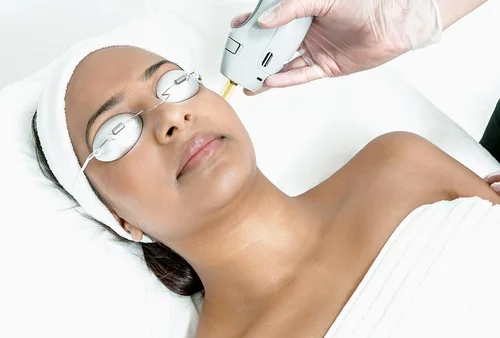
Speed is one reason the Alexandrite laser fits naturally into a busy practice schedule, but not all alexandrite lasers are built the same. The GentlePro™ Series from Candela offers larger spot sizes that most alexandrite laser devices simply don't have, and combined with advanced alexandrite laser technology significantly reduce the treatment time on large body areas like the back, legs, and chest. Add in with high repetition rates and you can move through more patients per day without running sessions long.
A few reasons this plays out well operationally:
- Shorter session times on large body areas mean tighter scheduling and higher daily patient volume
- Treatments can be delegated to trained clinical staff, freeing physician time for higher-complexity procedures while the device continues generating revenue
- Treatment cab be performed on any body areas such as arms, underarms, hands, legs, feet, toes, buttocks, back, and bikini line, giving patients multiple options within a single platform
- FDA-cleared indications beyond hair removal, including benign pigmented lesions, diffuse redness and facial vessels, spider and leg veins, and vascular lesions, add revenue lines without adding equipment
Patients who complete a hair removal series are also strong candidates for additional treatments. They are already familiar with your practice, comfortable with the technology, and more likely to return for other indicated services. A single Alexandrite laser device supports multiple points of return across a patient relationship.
Why Practices Are Investing in Alexandrite Laser Hair Removal
The market position of Alexandrite laser hair removal reflects where patient demand is concentrated. The Alexandrite segment was the highest contributor to the global laser hair removal market by type, and the broader market is projected to grow at a CAGR of 18.4% through 2032. More patients are choosing laser over traditional methods, and that preference is not reversing.
Hair removal is the number 2 nonsurgical aesthetic procedure overall. With 52% of the population considering hair removal with an aesthetic device and hair removal ranking as the number 5 nonsurgical procedure for men, the patient base for this service is broader than many practices realize. The male market in particular remains an area where practices have room to grow.
The revenue structure also works in the practice's favor. A standard hair removal series requires multiple sessions, which builds recurring revenue over several months per patient. Treatments can be delegated to qualified staff, keeping the device revenue-generating across a full provider day. Practices adding an Alexandrite laser hair removal device are not just adding a service line. They are adding a patient acquisition channel, a retention mechanism, and a gateway to additional indicated treatments through one platform.
GentleLase Pro®: 755 nm Alexandrite Laser for Hair Removal
The GentleLase Pro® (part of the Gentle Series of lasers) by Candela delivers 755 nm Alexandrite performance for practices building a focused hair removal program for Fitzpatrick skin types I through IV. FDA-cleared for permanent hair reduction, it features large spot sizes and high repetition rates that keep sessions efficient across all body areas. The proprietary Dynamic Cooling Device (DCD™) releases a precisely timed cryogen burst with each laser pulse, supporting patient comfort and epidermal protection throughout treatment without requiring manual adjustment by the operator. An intuitive interface makes it well suited to practices where treatments are delivered by trained clinical staff.
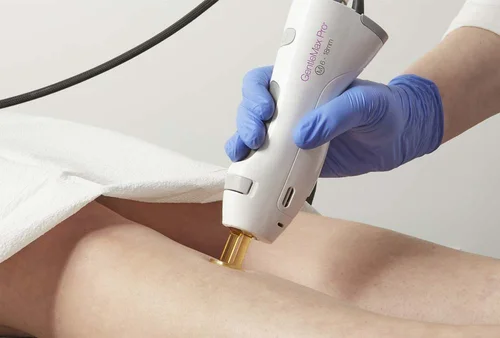
As your practice grows, GentleLase Pro® is fully upgradeable to the GentleMax Pro® configuration by adding the 1064 nm Nd:YAG wavelength. That upgrade extends your patient reach to all skin types and adds indications including vascular lesions, spider veins, and non-ablative skin rejuvenation without replacing the system you already have. For practices that need higher volume capacity, the GentleMax Pro Plus® is also available within the Gentle Pro Series lineup.
Is Your Practice Ready for Alexandrite Laser Hair Removal?
The clinical record behind the 755 nm Alexandrite laser is one of the strongest in aesthetic medicine. The patient demand for hair removal is growing. And the revenue structure of a multi-session treatment series creates predictable, recurring income for practices equipped to deliver it.
Whether you are building a hair removal program from the ground up or looking to add a focused single-wavelength system with room to grow, the Alexandrite laser makes a clear case. Contact a Candela product expert to find the right Gentle Pro Series configuration for your practice and patient base.
Frequently Asked Questions
Can Alexandrite laser hair removal be used on darker skin tones?
The 755 nm wavelength is best suited for Fitzpatrick skin types I through III. In patients with greater skin pigmentation, the high melanin absorption of the Alexandrite laser increases the risk of epidermal interaction. For Fitzpatrick types IV through VI, the 1064 nm Nd:YAG laser is generally the more appropriate clinical choice. Practices serving a diverse patient population benefit from having access to both wavelengths.
Are there side effects or risks associated with Alexandrite laser hair removal?
Transient side effects such as temporary redness and perifollicular edema are common and typically resolve within hours. In patients outside the recommended skin type range or with recent sun exposure, the risk of pigmentation changes increases. Proper patient selection, parameter management, and pre-treatment protocols are the primary factors in minimizing adverse outcomes.
How many sessions are typically needed for Alexandrite laser hair removal?
For most patients, 6 to 8 sessions spaced 4 to 6 weeks apart is a reasonable starting framework. The actual number depends on body area, hair coarseness, and how the individual patient responds. Patients who come in with a clear picture of what to expect tend to be more consistent with their sessions and more satisfied with where they end up.
1. GentleMax Pro Plus and GentleMax Pro 510(k), K201111, May, 2020. GentleMax Pro Plus, GentleMax Pro and GentleLase Pro U, Health Canada License 75833. GentleLase Family, 510(K) clearance K140732, November 2014, GentleLase, Health Canada License 10714. GentleYag Laser, 510(K) clearance K033172, March 2003.
2. Gentle Family User Manuals: Gentle Series User Manual, 2023; GentleMax Pro Plus 8501-00-2400_D; GentleLase Pro-U and GentleYag 8501-00-2200, Rev. G, Sept. 2021
3. Data on File, Candela, 2026.