 Japan
Japan Korea
Korea China
China

Energy-Based Acne Scar Treatment: What Practitioners Need to Know
What is Energy-Based Acne Scar Treatment?
Energy-based acne scar treatment uses controlled heat — delivered through lasers or radiofrequency (RF) energy — to trigger the skin’s natural repair process. By stimulating collagen production and remodeling scar tissue from within, these treatments progressively reduce the depth, texture, and visibility of acne scars over a series of sessions. Results vary by scar type, skin tone, and the technology used, but the clinical evidence across multiple modalities is strong.
Acne scarring stays with patients long after their breakouts clear, and it shows up in consultations more often than many practitioners expect. Up to 95% of individuals with acne are affected by scarring, and research shows they experience significantly higher rates of emotional distress and self-blame compared to those without it.
For practices equipped with the right resurfacing technology, that patient reality is also a significant clinical opportunity.
Key Takeaways
- Acne scarring is one of the most requested treatment areas in aesthetic practice, with a broad and growing patient population.
- Energy-based resurfacing treatments work by encouraging the skin to produce new collagen and repair damaged tissue.
- Patient skin tone plays a critical role in determining which technology is most appropriate.
- Scar type, skin tone, and how much downtime a patient can manage all shape the right treatment approach.
- Candela's Matrix™ system offers three RF-based applicators, including Fractional Sub-Ablative RF Resurfacing for skin texture and collagen remodeling.
Does Energy-Based Treatment for Acne Scars Work? What the Evidence Shows
The clinical evidence across multiple treatment modalities makes a strong case.
A 2025 systematic review of 16 studies covering 481 patients found radiofrequency (RF) microneedling matched the outcomes of fractional CO2 laser and Er:Glass lasers for acne scarring while requiring less recovery time and producing fewer adverse events.
A consensus panel of 24 dermatologists and plastic surgeons reviewed ablative fractional laser approaches and found that a series of two to four sessions outperforms single-session treatment for rolling and superficial boxcar scars. Spacing sessions properly is as important as the technology selected.
Energy-based treatments for acne scars works. The technology, number of sessions, and patient profile together determine how well.
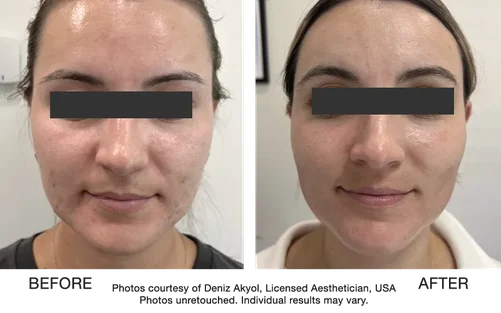
How Laser and RF Energy-Based Resurfacing Treat Acne Scars
All laser and RF-based resurfacing options share the same core mechanism: controlled heat applied to the skin triggers the body's natural repair process, generating new collagen and remodeling scar tissue from within.
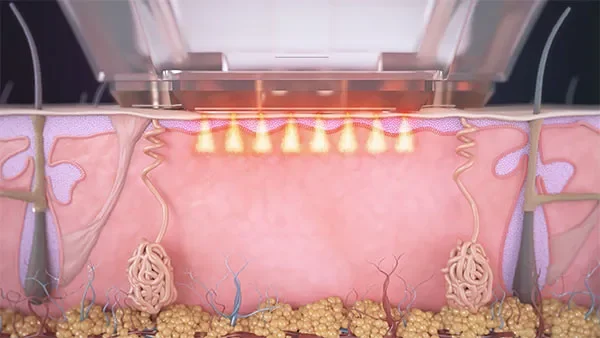
The differences lie in depth of penetration, recovery time, and how the skin responds based on its tone.
- Ablative fractional lasers, including the fractional CO2 laser and erbium laser (Er:YAG): Remove thin columns of skin tissue to drive significant collagen induction. Strong results for deeper scarring, though recovery typically takes several days, and post-treatment skin darkening is a higher risk for patients with deeper skin tones.
- Non-ablative fractional lasers: Heat the deeper skin layers without disturbing the surface. Faster recovery, but patients see changes build more gradually and usually need more sessions.
- Fractional RF and RF microneedling: Deliver radiofrequency energy through tiny needles or electrode arrays into the dermis. Because RF works independently of skin pigment, it is well suited for patients with darker skin tones where laser skin resurfacing carries a higher pigmentation risk.
Knowing where each technology fits is what allows a practice to offer acne scar treatment that genuinely works across a diverse patient base.
Matching the Right Treatment to the Right Patient
Scar Type and Treatment Depth
Scar shape and depth drive technology selection more than any other variable. Each scar type presents differently:
- Rolling scars: Wide and shallow, with fibrous bands beneath the surface pulling the skin downward. Subcision to release those bands before resurfacing typically improves treatment outcomes.
- Boxcar scars: Defined edges, flat base. Laser and RF-based resurfacing both address these well at moderate treatment depths.
- Ice pick scars: Narrow and deep. The most difficult to treat with resurfacing alone, and most practitioners incorporate combination approaches.
- Hypertrophic scars: Raised above the skin surface rather than depressed, caused by excess collagen during healing. These sit in a different treatment category from atrophic resurfacing and need a separate approach.
Skin Tone and Fitzpatrick Skin Type Considerations
Skin tone shapes the risk profile of every resurfacing choice. For patients with lighter skin tones (Fitzpatrick skin types I to III), ablative fractional laser resurfacing is a strong option. For patients with darker skin tones (Fitzpatrick skin types IV to VI), RF-based treatments lower the risk of post-treatment skin darkening while still delivering comparable outcomes.
A 2025 study of 397 patients with Fitzpatrick skin types III and IV compared fractional laser and fractional RF head-to-head. Post-inflammatory hyperpigmentation rates were low in both groups, at 5.4% and 4.7%, respectively, but the fractional RF group showed less redness and a shorter recovery period, making it a more practical option for practices serving a diverse patient mix.
Downtime and Patient Expectations
Patients ask about recovery time at almost every consultation. Ablative fractional laser typically requires 5 to 7 days of downtime per session. RF microneedling and fractional RF generally get patients back to their routine within 1 to 3 days. Whichever path is taken, new collagen continues building for months after each session. Most patients need multiple sessions, and setting that expectation clearly at the start leads to better satisfaction throughout the process. Patients should consult with their practitioner for actual treatment times based on skin needs.
How the Matrix System Supports Skin Resurfacing in Your Practice
Matching technology to patient needs is only possible when your practice has a platform built for that range. The Matrix system gives you the RF-based resurfacing capability to treat acne-related skin concerns across scar types, skin tones, and treatment goals in one system.
Fractional Sub-Ablative RF Resurfacing: Real Results With Minimal Downtime
For patients with acne-related skin texture concerns, the Fractional Sub-Ablative RF Resurfacing (Sublative® RF) applicator is the most relevant starting point. It sends RF energy through a grid of tiny electrode pins, creating precise treatment zones that stimulate collagen production and resurface the skin with minimal surface disruption and little to no downtime.
A Multi-Modality Platform Built for Consistent Results Across Skin Types
The Matrix system gives your practice three applicators in one system: Fractional Sub-Ablative RF Resurfacing, RF Microneedling (Matrix Pro®), and Non-Invasive Wrinkle Treatment (Sublime™). Each can be used independently or stacked together depending on what the patient's skin needs at that visit.
Matrix Pro reaches up to three skin depths in a single treatment pass. Built-in impedance monitoring reads each patient's skin in real time and calibrates energy delivery accordingly, reducing the risk of under- or over-treatment across the series.
Clinical data from Matrix treatments shows:*
- 94% of subjects saw improvement in wrinkle reduction
- 86% reported satisfaction with their aesthetic results
- 92% said they would recommend Matrix to others
- 5 out of 5 providers preferred Matrix over other RF microneedling devices
One FDA-cleared platform covers skin texture improvement, skin tightening, and facial rejuvenation across all Fitzpatrick skin types. Treatment stacking means your team can address multiple concerns in a single appointment without switching devices or adding equipment.
Start Delivering Better Acne Scar Outcomes
Energy-based acne scar treatment is one of the most clinically supported and in-demand categories in aesthetic medicine right now. Patients are asking for it, and the data backs it up. The practices capitalizing on that demand are matching the right technology to each patient's scar type, skin tone, and recovery tolerance.
Matrix gives your practice a multimodality RF platform to do that well, across a broad patient base, with the clinical data behind every session.
Take the next step. Contact a Candela product expert and find out how Matrix fits your practice.
Frequently Asked Questions
Does energy-based treatment really get rid of acne scars permanently?
Significant, long-lasting improvement is realistic. Complete elimination is not. Patients who complete a full series of treatments typically see a meaningful reduction in scar depth and texture, with results continuing to build over several months. Deep ice pick scars are the hardest to fully resolve, and setting that expectation early produces better outcomes for patients and the practice.
How many sessions does skin resurfacing for acne scars typically require?
It depends on the technology and how significant the scarring is. For ablative fractional laser, a consensus panel of dermatologists recommends two to four sessions for the best clinical response. RF microneedling plans typically run three to four sessions spaced three to six weeks apart, with optimal results generally visible three to six months after the final session.
What makes RF-based resurfacing a strong option for acne scar treatment across different skin types?
RF energy does not interact with skin pigment, so results stay consistent regardless of skin tone. That matters most for patients with darker skin tones, where ablative laser options carry a higher risk of post-treatment darkening. A 2025 comparative study confirmed that fractional RF produced lower pigmentation rates and shorter recovery in darker skin type patients compared to fractional laser.
What should I look for in an RF device for acne scar treatment?
Three factors matter most. First, multi-depth energy delivery — the ability to target different dermal layers in a single pass means the device can address varying scar depths without requiring multiple treatment heads. Second, real-time impedance monitoring, which reads tissue resistance as it changes during treatment and recalibrates energy output accordingly, reducing the risk of under- or over-treatment. Third, validated protocols across all Fitzpatrick skin types, so the same platform can serve a diverse patient base without switching devices. A system that combines these with fractional RF resurfacing capability covers the broadest range of acne scar presentations.
The Matrix system brings three combinable RF applicators to your treatment room: Fractional Sub-Ablative RF Resurfacing for collagen remodeling and skin texture improvement, RF Microneedling for treating deeper skin layers, and Non-Invasive Wrinkle Treatment for surface-level concerns. Real-time energy monitoring keeps results consistent, and coverage across all Fitzpatrick skin types means your practice can serve a wide patient base with a single device.